Choosing outdoor furniture wood is less about finding a magical species. It is about matching the material to your climate, budget, and maintenance habits. Rain, sunlight, humidity, and freezing temperatures can slowly open joints and fade beautiful surfaces. A bench may look sturdy in a showroom, yet behave differently beside a damp garden wall. So, what is the best wood for durable outdoor furniture? The honest answer depends on where and how the furniture will live.
Teak remains a trusted choice because its natural oils help resist moisture, insects, and seasonal movement. It can age into a soft silver color, although neglected teak may develop uneven stains. Ipe is extremely dense and durable, but its weight makes cutting, drilling, and moving more difficult. White oak offers strength and attractive grain, but it needs careful sealing outdoors. Cedar and redwood are lighter and naturally resistant to decay, yet softer surfaces can dent under daily use. Acacia can provide good value, though quality varies between suppliers and pieces.
Details matter. Look for straight, well-dried boards, tight joinery, rounded edges, and stainless-steel hardware. Avoid hidden cracks around screws. Those small flaws often become large problems after repeated wetting and drying. Apply finishes according to the manufacturer’s instructions, not personal guesswork. Even expert recommendations have limits because local weather changes everything. A coastal patio, a shaded balcony, and a dry desert garden demand different decisions. Durable furniture is not maintenance-free. It is furniture chosen thoughtfully, inspected regularly, and protected before damage becomes obvious.
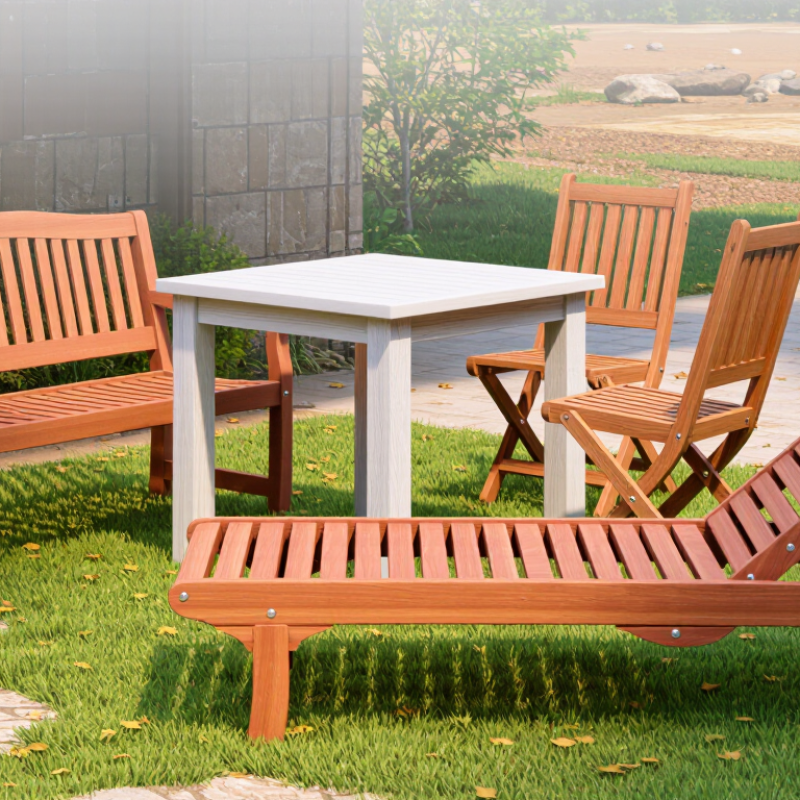
How to Choose the Best Wood for Durable Outdoor Furniture?
What Makes Wood Suitable for Durable Outdoor Furniture
Wood for outdoor furniture must handle rain, sunlight, temperature swings, and daily use. Durability starts with natural resistance to decay. Dense hardwoods often perform well, but density alone is not enough. A heavy board can still crack if it absorbs and releases moisture quickly. Look for tight grain, stable movement, and clear information about drying and treatment. These details matter more than appearance.
In my outdoor furniture projects, I inspect end grain before choosing boards. Fewer checks and small, even pores often indicate better drying control. I also reject pieces with deep knots near joints. They may look rustic, but they can weaken under repeated loading. A suitable species should accept exterior finishes without becoming slippery or patchy. Good drainage matters too. Water trapped around legs or seat slats shortens service life quickly. Looks can mislead.
I once selected a beautiful, dense board that warped after one wet season. The mistake was ignoring its moisture content and frame design. Wood needs room to move. Stainless or corrosion-resistant fasteners, rounded edges, and raised feet reduce common failures. Still, no wood is maintenance-free. Even naturally durable timber benefits from cleaning, inspection, and renewed protection when the surface turns dry or gray. I would now test a small sample first. It costs less than rebuilding a table.
What Makes Wood Suitable for Durable Outdoor Furniture
Higher Janka hardness generally indicates better resistance to dents and wear, while higher density often supports strength and long-term outdoor performance. Natural decay resistance is also important: teak, ipe, western red cedar, white oak, and black locust are commonly recognized for useful resistance to decay, although performance depends on moisture control, drainage, joinery, maintenance, and exposure conditions. Values shown are representative published averages and may vary by specimen and growing region.
Choosing outdoor wood starts with climate, not appearance. Heat, humidity, rain, and sunlight affect every species differently. The USDA Forest Products Laboratory’s Wood Handbook explains that wood expands and contracts as moisture changes. Movement often appears around joints, fasteners, and end grain. A beautiful board can still split.
Moisture is the main threat. The same handbook identifies wood moisture above roughly 20% as a practical decay concern. In humid regions, choose naturally durable species such as teak, cedar, or white oak. In wet climates, prioritize tight joints, sloped surfaces, and open spacing beneath seats. Water must escape quickly.
Shade helps, but trapped moisture remains dangerous. The U.S. Environmental Protection Agency reports a 37% increase in heavy precipitation events in the contiguous United States between 1958 and 2012. That trend makes drainage more important than many buyers expect.
Sun creates a different problem. Ultraviolet exposure fades color and dries the surface, while repeated wet-dry cycles cause checking. A penetrating exterior finish can slow these changes, but it cannot stop them. Inspect end grain, screw holes, and chair-leg contact points each season.
A common mistake is choosing dense wood and ignoring design. I have seen durable boards fail because water sat beneath them. No species is maintenance-free. Climate data should guide the wood choice, but construction details often decide its service life.
Choosing wood starts with exposure, not appearance. On a shaded porch, cedar can perform well. Beside a pool, water changes the decision. The USDA Forest Products Laboratory’s Wood Handbook, FPL-GTR-282 (2021), identifies moisture cycling as a major cause of swelling, checking, and decay. That finding matters more than a showroom sample. Small design details matter, too.
Teak contains natural oils and remains dimensionally stable, but its cost can surprise buyers. Ipe is extremely dense. USDA Janka hardness data place it near 3,680 lbf, compared with about 350 lbf for western red cedar. Hardness resists dents, not poor joinery. Cedar is lightweight and easy to cut, yet chair legs can mark its surface. Redwood offers similar workability and attractive grain, although quality varies by region. Pressure-treated pine is economical. The American Wood Protection Association’s standards show that treatment levels should match the furniture’s exposure.
Inspect the end grain, fastener holes, and underside. Water trapped beneath a tabletop causes trouble first. Use corrosion-resistant fasteners. Oil is not magic. I once saw carefully oiled furniture crack because its feet sat in wet soil. That failure changed my maintenance routine. Teak suits low-maintenance projects, while ipe handles heavy wear. Cedar and redwood fit lighter pieces. Treated pine suits budget builds. Species alone cannot guarantee durability; drainage, joinery, and seasonal care often decide service life.
| Wood Species | Natural Decay Resistance | Dimensional Stability | Relative Hardness | Weathering Characteristics | Maintenance Needs | Typical Outdoor Service Potential | Best-Suited Furniture |
|---|---|---|---|---|---|---|---|
| Teak | Excellent · 5/5 Natural oils and silica help protect the wood from moisture, insects, and decay. |
Excellent · 5/5 Low moisture movement compared with many other solid woods. |
High · 5/5 Dense and resistant to abrasion. |
Weathers from golden brown to silver-gray when left unfinished. Natural oils can make finishing more demanding. | Clean periodically. Apply a suitable exterior sealer or teak treatment only when retaining the original color is desired. | Often several decades when properly designed, maintained, and kept off standing water. | Dining sets, benches, loungers, and high-exposure furniture. |
| Ipe | Excellent · 5/5 Very resistant to fungal decay and many outdoor environmental stresses. |
Very good · 4/5 Dense structure provides good stability, although careful construction is important. |
Very high · 5/5 Extremely hard and highly wear-resistant. |
Typically changes from brown to gray with prolonged sunlight exposure if not maintained with a UV-protective finish. | Low routine maintenance, but machining and fastening require appropriate tools and techniques. | Several decades are possible in well-built furniture with good drainage and regular inspection. | Heavy-use benches, outdoor dining furniture, and structural components. |
| White Oak | Good · 4/5 Closed pores and naturally durable heartwood provide better moisture resistance than many domestic hardwoods. |
Good · 4/5 Generally stable when properly dried, sealed, and assembled. |
High · 4/5 Hard enough for frequent-use furniture. |
Can gray, crack, or develop surface checking if exposed without a protective finish and regular care. | Requires a high-quality exterior finish and prompt attention to damaged coating or end grain. | Commonly suitable for many years outdoors when fully protected from persistent moisture. | Covered patios, porch furniture, tables, and chairs with maintained finishes. |
| Western Red Cedar | Good · 4/5 Heartwood contains natural extractives that help resist decay and insects. |
Very good · 4/5 Lightweight wood with relatively low shrinkage and swelling. |
Low to medium · 2/5 Soft surface can dent and scratch more easily than hardwoods. |
Weathers to gray and may develop checks or dents under heavy exposure and use. | Clean regularly and renew a penetrating finish when color retention or additional weather protection is required. | Often many years outdoors, especially when elevated from the ground and protected from constant wetting. | Lightweight chairs, planters, screens, and covered-patio furniture. |
| Redwood | Good · 4/5 Durable heartwood has natural resistance to decay and insects; lower-grade sapwood is less resistant. |
Good · 4/5 Relatively stable with moderate dimensional movement. |
Low to medium · 2/5 Easy to work but more vulnerable to impact damage than dense hardwoods. |
Turns gray outdoors and can split or check if water is trapped or finishes fail. | Use a suitable exterior coating when appearance and color consistency matter; keep joints and end grain protected. | Many years are possible when durable heartwood is selected and drainage is well designed. | Benches, tables, decorative furniture, and sheltered outdoor areas. |
| Mahogany | Good · 4/5 Many genuine mahogany species have good decay resistance, but properties vary by species and grade. |
Good · 4/5 Usually machines well and remains relatively stable when properly dried. |
Medium to high · 3/5 Offers a good balance of workability and surface durability. |
Can fade and weather unevenly without a maintained exterior finish. | Regular cleaning and recoating are recommended for color retention and protection from moisture. | Suitable for long-term outdoor use when the correct species, finish, and construction details are used. | Decorative dining sets, armchairs, doors, and covered or partially exposed furniture. |
Selection tip: Durability depends not only on wood species but also on heartwood grade, joinery, end-grain protection, drainage, local climate, and maintenance. A raised design with rounded edges and good airflow can significantly extend the life of outdoor furniture.
For durable outdoor furniture, wood quality begins with the board, not the finish. I inspect end grain, knots, cracks, and uneven color before buying. Dense, straight-grained boards usually resist dents and movement better. However, appearance can mislead. A flawless surface may hide internal checks. The USDA Forest Products Laboratory’s Wood Handbook explains that moisture changes cause wood to shrink and swell. Therefore, boards should be properly dried and suited to the local climate. Ask for moisture readings, not vague promises.
Treatment deserves equal attention. Preservatives must penetrate deeply, especially around cut ends and drilled holes. A thin surface coating cannot protect untreated inner wood. Keep furniture raised from wet ground, and leave space between slats for drainage. I prefer designs with rounded edges because they hold less water. Still, maintenance is often underestimated. Even good timber can fail when water remains trapped under cushions. That mistake is common.
Sustainability requires traceable sourcing. FAO’s Global Forest Resources Assessment 2020 recorded 4.06 billion hectares of forest worldwide. It also reported a net forest loss of 178 million hectares from 1990 to 2020. Choose documented legal and responsibly managed sources, while checking transport distance and treatment chemicals. Reclaimed wood can be valuable, but its previous coatings and moisture history need verification. I sometimes reject attractive boards after finding hidden damage. It feels wasteful, but replacing outdoor furniture early creates a larger environmental cost.
Outdoor wood survives through routine, not one generous coat of finish. I learned this after leaving a cedar bench beneath a dripping roof edge. Its top looked sound, but the end grain darkened and softened. Choose dense, naturally weather-resistant timber, then inspect it before every season. Look for open joints, raised fibers, trapped leaves, and water that sits longer than a few hours. Small defects spread quickly.
Wash furniture with mild soap, clean water, and a soft brush. Avoid blasting joints with a pressure washer. It can drive water deeper and roughen the surface. Let the wood dry completely before applying a breathable exterior finish. On sunny decks, a UV-resistant oil or stain may need renewal every one to three years. The correct interval depends on exposure, not the calendar. Test a hidden area. Color can change unexpectedly.
Keep legs on rubber feet or stone risers, while preserving airflow underneath. Tighten loose hardware gently, because over-tightening can crush softer fibers. Use a cover during prolonged rain, but leave space for ventilation. Sealed plastic wrap may trap condensation. I still make one mistake: waiting until furniture looks damaged. A quarterly inspection is easier than sanding a gray, split tabletop. If the grain feels fuzzy, sand lightly with fine paper, remove dust, and refinish only after the surface is dry.
Choose wood with natural decay resistance, stable movement, and tight grain. Density helps, but it cannot prevent every crack. Good drainage matters too.
No. Inspect the end grain, knots, and moisture condition. A beautiful board may warp after one wet season. Looks can mislead.
Dense hardwood suits heavy wear and frequent use. Cedar or redwood fits lighter furniture. Treated pine offers a lower-cost option. Exposure changes the decision.
Repeated wetting and drying can cause swelling, checking, and decay. Water trapped beneath tabletops creates trouble first. Keep surfaces and joints well drained.
Use corrosion-resistant fasteners, rounded edges, and raised feet. Allow wood room to move. Avoid deep knots near joints. They can weaken under repeated loading.
Use mild soap, clean water, and a soft brush. Avoid strong pressure near joints. It may force water deeper and roughen the surface.
Inspect it every season, or quarterly in harsh conditions. Exterior oil or stain may need renewal every one to three years. Exposure matters more than dates.
Do not place legs directly in wet soil. Do not seal furniture inside airtight plastic. I once trusted oil alone. The feet still stayed damp and cracked.
Look for open joints, raised fibers, gray surfaces, and trapped leaves. If the grain feels fuzzy, sand lightly after drying. Small defects spread quickly.
Choosing the best wood for durable outdoor furniture begins with understanding strength, moisture resistance, natural decay protection, and the ability to withstand changing temperatures. Climate plays a major role: humid, rainy environments require wood that resists rot and swelling, while sunny or dry regions demand strong resistance to cracking and fading. Popular choices can vary in density, appearance, maintenance needs, and environmental impact, so the question “what is the best wood for durable outdoor furniture” depends on local weather, budget, design preferences, and expected use.
High-quality wood should have consistent grain, minimal defects, and suitable outdoor treatment. Responsible sourcing and certified materials can also support sustainability. To extend the furniture’s life, clean it regularly, allow moisture to drain, use protective covers when appropriate, and apply suitable oil or sealant as needed. Periodic inspections help identify cracks, loose joints, or surface wear before minor issues become serious damage.

Mingkei Furniture