Why Is Commercial Furniture More Expensive Than Residential?

Time:2026-10-08 Author:Sophia
0%

Why Is Commercial Furniture More Expensive Than Residential?

Many buyers ask, “why is commercial furniture so expensive compared to residential?” The answer begins with its working environment. A dining chair at home may serve four people each evening. A restaurant chair may support hundreds of guests every week. An office desk may face constant movement, cleaning, spills, and equipment changes.

Commercial pieces usually require stronger frames, reinforced joints, heavier hardware, and finishes that resist abrasion. Manufacturers also test products for stability, load capacity, fire performance, and repeated use. These tests add labor, engineering, certification, and quality-control costs. As contract-furniture specialist Jamie Gold explains, “Commercial furniture is designed for continuous performance, not occasional comfort.” That distinction matters.

It also gets overlooked.

Commercial orders often involve custom dimensions, coordinated colors, installation, delivery, and replacement planning. A hotel may need hundreds of identical nightstands, while a home buyer may need only one. Consistency raises production demands, but it can reduce long-term maintenance problems. The initial price is only one part of the calculation.

Still, expensive does not always mean better. Some commercial products carry premium branding without offering meaningful durability. Buyers should inspect warranties, materials, repair options, and testing documentation. I have found that appearance can mislead, especially when a glossy finish hides a weak internal structure. Residential furniture may be the smarter choice for light-duty spaces. Commercial furniture earns its cost when safety, reliability, and frequent use genuinely matter.
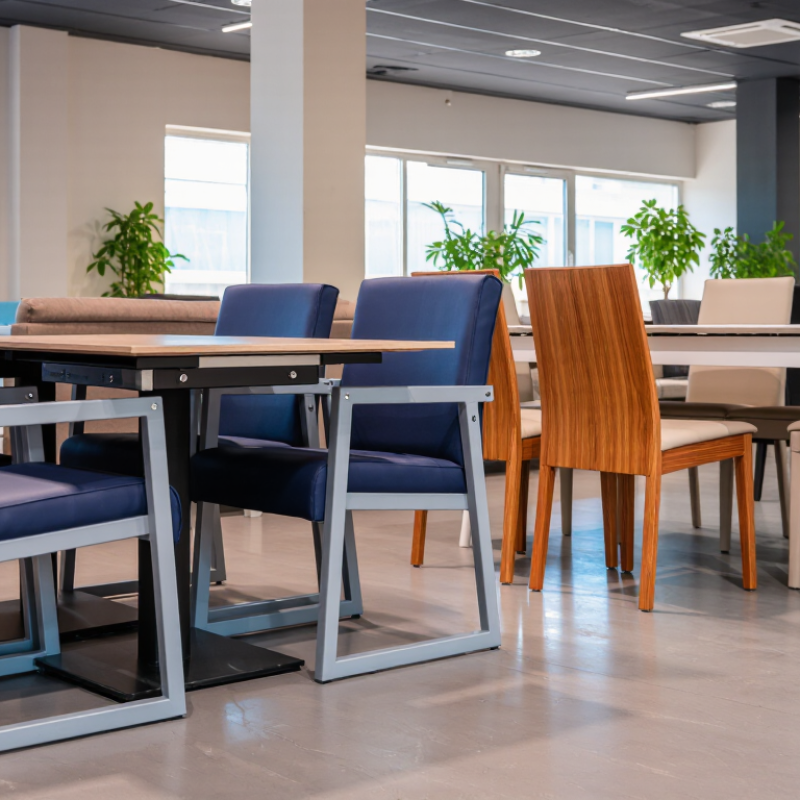
Why Is Commercial Furniture More Expensive Than Residential?

What Defines Commercial Furniture and Residential Furniture?

Commercial furniture is designed for shared, demanding environments. It appears in offices, hotels, restaurants, schools, and healthcare facilities. Residential furniture is made mainly for private homes and smaller household routines. The difference begins with expected use, not appearance.

A commercial chair may support many users every day. Its frame, joints, fabric, and fasteners usually need stronger construction. Designers also consider cleaning chemicals, replacement parts, fire performance, and accessibility requirements. Tables may include cable openings, modular connections, or reinforced edges. These details increase manufacturing and testing costs. A residential chair can focus more on softness, personal style, and occasional use. It may feel warmer, but it is not automatically less durable.

The line is not perfectly clean. Some homes use contract-style seating in busy kitchens. Some small offices choose residential-looking furniture to create comfort. I have seen a simple dining chair fail quickly in a waiting area because its joints were never built for constant movement. That mistake looked inexpensive at first. It became costly after repairs and replacement. Commercial furniture often has firmer cushions and plainer finishes, which can seem less inviting. Yet those choices may support easier maintenance and longer service. Residential furniture usually offers more decorative freedom, while commercial furniture must answer practical questions about traffic, cleaning, safety, and repair. The right definition depends on the setting, users, and expected workload, not only on price.

How Commercial Furniture Is Designed for Heavy, Continuous Use

Why Is Commercial Furniture More Expensive Than Residential?

How Commercial Furniture Is Designed for Heavy, Continuous Use

Commercial furniture is built for repeated contact, not occasional comfort. A dining chair at home may support a few users each day. A restaurant or office chair can face constant sitting, dragging, cleaning, and repositioning. That difference changes the frame, joints, foam density, fabric selection, and warranty requirements. It also raises production costs.

Industry testing reflects this harsher environment. ANSI/BIFMA X5.1 office seating procedures include static-load, impact, and repeated-cycle durability tests. Some commercial seating evaluations involve approximately 100,000 cycles, far beyond ordinary household expectations. BIFMA’s Business and Institutional Furniture Industry Statistics also tracks commercial shipments by units and sales value, showing how durability is treated as an industry cost factor. The price is not only for appearance.

Designers often use reinforced connections, replaceable components, commercial-grade laminates, and cleanable textiles. A table edge may resist thousands of handoffs, spills, and careless impacts. Hardware receives attention too. Loose fasteners quickly become maintenance problems in shared spaces. Still, commercial does not mean indestructible. Poor installation, excessive loading, and weak maintenance can shorten service life. That assumption needs testing. A higher price can purchase stronger engineering, but it cannot correct bad specification choices.

Which Materials and Construction Standards Increase Commercial Costs?

Commercial furniture costs more because it must survive demanding environments, not occasional household use. In offices, hotels, clinics, and restaurants, chairs may be moved dozens of times daily. Tables face spills, impacts, cleaning chemicals, and constant rearrangement. The materials must tolerate that abuse.

Manufacturers often use high-pressure laminate, commercial-grade plywood, reinforced particleboard, powder-coated steel, and contract-rated upholstery. These materials cost more than thin residential panels or decorative fabrics. Moisture-resistant cores help prevent swelling near kitchens and washrooms. Fire-resistant foams and textiles may also be required, depending on local building regulations. Those requirements add testing, documentation, and production time.

Construction standards raise the price further. Commercial frames usually include stronger joints, welded supports, thicker hardware, and tested load capacities. Seating may undergo repeated-cycle testing before installation. Edges are sealed more carefully, and components may be replaceable after heavy use. On busy fit-outs, installers often notice the difference in weight first. It slows handling, but it can reduce early failures.

Still, commercial-grade does not mean indestructible. Poor maintenance, incorrect installation, or unsuitable cleaning products can damage expensive surfaces. A thicker panel is not automatically better either. It may increase durability while creating unnecessary weight and waste. The right specification should match traffic, moisture, cleaning routines, safety rules, and expected service life. That judgment is where many budgets succeed or quietly go wrong.

How Safety, Accessibility, and Regulatory Requirements Affect Pricing

Commercial furniture often costs more because it must perform safely under constant, demanding use. A dining chair at home may serve four people daily. A chair in a hotel, clinic, or workplace may face hundreds of movements every week. Frames need stronger joints, durable finishes, and tested load capacity. These features increase material and manufacturing costs. They can also reduce replacement frequency, though that benefit is not always obvious on an invoice. Experienced purchasing teams inspect welds, edge treatments, fasteners, and maintenance access before comparing prices.

Safety requirements add another layer. Commercial products may need fire-performance documentation, stability testing, impact resistance, and safer material specifications. Exact obligations vary by country, building type, and intended use. A reliable supplier should provide test reports, care instructions, and clear product limits. I have seen buyers focus on the lowest quotation and overlook installation details. That choice can create uneven tables, loose fixings, or blocked walkways. The cheapest unit is not always cheapest in service.

Accessibility affects design, too. Tables may need suitable knee clearance, reachable controls, and enough space for mobility devices. Seating may require varied heights, firm support, and easy transfer. These adjustments can involve custom dimensions, smaller production runs, and extra quality checks. They are not decorative upgrades. Still, compliance is not perfectly predictable. A product that works in one building may fail another’s layout or inspection. Reviewing drawings with an accessibility professional before ordering is wise, even when budgets feel tight.

Why Is Commercial Furniture More Expensive Than Residential? — How Safety, Accessibility, and Regulatory Requirements Affect Pricing
Pricing Dimension Residential Furniture Commercial Furniture Relevant Safety or Regulatory Framework How It Affects Pricing
Expected Use and Load Cycles Generally designed for normal household use, with lower daily traffic and fewer users. Designed for repeated use in offices, hotels, restaurants, schools, healthcare settings, and public facilities. Commercial seating is commonly evaluated against non-domestic furniture strength, stability, and durability requirements such as EN 16139 or applicable ANSI/BIFMA standards. Higher-grade frames, joints, hardware, and testing increase manufacturing and quality-control costs.
Durability and Surface Performance Decorative finishes may be selected primarily for appearance and ordinary household wear. Surfaces are more likely to require resistance to abrasion, impact, stains, disinfectants, moisture, and frequent cleaning. Performance specifications vary by product type and project; commercial contracts often define abrasion, chemical-resistance, and cleanability requirements. Commercial laminates, protective coatings, upholstery, and edge treatments typically cost more than basic residential finishes.
Fire and Flammability Requirements Requirements depend on the product category, jurisdiction, and intended use. Public-use projects may require documented flame-spread, smolder-resistance, or upholstery performance, especially in hospitality, healthcare, education, and institutional environments. Examples include California Technical Bulletin 117-2013 for certain upholstered furniture sold in California and ASTM or EN fire-test methods specified by a project or jurisdiction. Specialized foams, fabrics, barriers, testing, labeling, and certification documentation add cost.
Accessibility and Clearances Furniture is usually selected for individual household preferences and room layouts. Furniture layouts may need to support accessible routes, maneuvering space, reach ranges, and usable work or dining areas. In the United States, the 2010 ADA Standards include a 36-inch minimum clear width for many accessible routes and a 60-inch diameter turning space where a full turning circle is required; local building codes may also apply. Accessible dimensions, adjustable components, additional circulation space, and layout coordination can increase product and installation costs.
Ergonomics and Adjustability Adjustability is often optional and based on personal preference. Workstations and seating may need adjustable seat height, lumbar support, armrests, desk height, or monitor-related accessories for diverse users. Ergonomic specifications may reference workplace guidance and voluntary standards; exact requirements depend on the employer, industry, and procurement specification. Additional mechanisms, controls, testing, and user-adjustable components raise the unit price.
Hygiene and Cleanability Routine household cleaning is normally sufficient. Furniture in healthcare, food-service, education, and high-traffic environments may require sealed surfaces, cleanable upholstery, moisture resistance, and compatibility with specified cleaning agents. Healthcare and food-service projects may impose additional infection-control, sanitation, or material requirements beyond general furniture standards. Non-porous materials, welded or sealed construction, removable covers, and validated cleaning performance increase material and production costs.
Installation, Anchoring, and Site Safety Products are often delivered for customer assembly without project-specific installation engineering. Large installations may require anchoring, wall attachment, anti-tip measures, electrical coordination, field assembly, and compliance with building or fire-safety requirements. Requirements are determined by local building codes, fire codes, accessibility rules, and the conditions of the installation site. Professional installation, site surveys, engineering review, and safety hardware increase the total project cost.
Testing, Documentation, and Liability Product documentation is often limited to assembly, care, and warranty information. Commercial purchasers may request test reports, certificates, material disclosures, maintenance instructions, warranty terms, and traceability records. Documentation requirements are commonly defined in project specifications, procurement contracts, public-sector rules, and applicable product standards. Laboratory testing, compliance administration, insurance, quality audits, and recordkeeping are incorporated into the selling price.
Replacement and Lifecycle Planning Replacement is usually handled individually when an item becomes worn or damaged. Organizations often require consistent finishes, spare parts, repairability, phased delivery, and warranty support across multiple locations. Lifecycle requirements are typically established by the buyer’s procurement policy and project specification rather than by one universal furniture law. Longer warranties, replacement parts, inventory planning, and service support increase the upfront commercial price but can reduce operational disruption.
Note: Commercial furniture pricing varies by product category, jurisdiction, performance specification, order volume, installation conditions, and required documentation. Accessibility, fire-safety, and testing requirements should be verified for the specific project and location.

Why Customization, Warranty, and Lifecycle Value Shape Commercial Prices

Commercial furniture costs more because it must perform under heavier, longer, and less predictable use. A conference chair may support dozens of users each day. A residential chair usually serves one household. BIFMA’s 2024 market outlook estimated North American business and institutional furniture shipments at roughly $14 billion in 2023. That scale reflects stricter testing, reinforced frames, replaceable components, and installation requirements. Customization also adds engineering hours. Adjusting dimensions, fabrics, power modules, or acoustic panels can affect the entire specification.

Warranty is another price driver. Commercial warranties often cover intensive use, larger quantities, and coordinated service. Suppliers must maintain spare parts and documentation for years. The U.S. General Services Administration’s total-cost-of-ownership guidance treats purchase price, maintenance, replacement, and disposal as connected costs. A durable workstation may cost more upfront but reduce disruption during a ten-year fit-out. Still, lifecycle claims deserve scrutiny. A long warranty does not guarantee easy repairs. Some contracts exclude labor, finishes, or misuse.

Tips: Request a warranty matrix, not just a headline period. Ask about daily-use assumptions, replacement-part availability, and on-site labor. Compare five-year and ten-year costs. Measure repair time, too. A cheaper chair that fails during a busy shift can become surprisingly expensive. I have seen specifications focus heavily on appearance while ignoring cleaning routines and future reconfiguration. That is an avoidable weakness. Cite: BIFMA 2024 market outlook; U.S. GSA Total Cost of Ownership guidance.

FAQS

What is commercial furniture designed for?

It is designed for shared spaces with frequent use. Offices, hotels, schools, and clinics need this approach. Chairs may move dozens of times daily.

How does residential furniture differ from commercial furniture?

Residential furniture supports private household routines. It often emphasizes softness, personal style, and occasional use. It is not automatically less durable.

Why does commercial furniture usually cost more?

Higher costs come from stronger materials, testing, labor, and replacement planning. A chair may endure repeated sitting, dragging, spills, and cleaning.

Which materials are common in commercial furniture?

Common choices include reinforced plywood, sealed panels, coated steel, and contract-rated upholstery. Moisture-resistant cores help near kitchens and washrooms.

What construction details improve durability?

Reinforced joints, thicker hardware, welded supports, and sealed edges can reduce early failures. Replaceable parts also simplify repairs.

Why are commercial cushions and finishes sometimes firmer?

Firmer cushions can resist frequent compression. Plainer finishes are often easier to wipe and maintain. They may feel less inviting.

Can residential furniture work in a commercial setting?

Sometimes, but the workload must match its construction. A dining chair may fail quickly in a busy waiting area. That choice can still be wrong.

Does commercial furniture last forever?

No. Bad installation, excessive loading, and unsuitable cleaners can shorten its life. Higher cost helps, but it cannot fix poor specifications.

How should buyers choose between commercial and residential furniture?

Consider users, traffic, moisture, cleaning routines, safety needs, and expected service life. Price alone is a weak guide. The cheapest option may cost more later.

Conclusion

Commercial furniture is built for environments where tables, chairs, storage units, and workstations may be used continuously by many people every day. Unlike residential furniture, which often prioritizes comfort, style, and occasional use, commercial pieces focus on durability, stability, easy maintenance, and consistent performance. Stronger frames, reinforced joints, higher-grade surfaces, and tested hardware all contribute to increased manufacturing costs.

This helps explain why is commercial furniture so expensive compared to residential options. Commercial products must often meet stricter safety, accessibility, fire-resistance, and ergonomic requirements, which can involve additional testing and specialized construction. Businesses may also request custom sizes, finishes, layouts, or integrated features, raising design and production expenses. Although the initial price is higher, commercial furniture can provide better lifecycle value through longer service, fewer replacements, broader warranties, and reduced maintenance. Its cost reflects not only the materials used, but also the engineering, compliance, customization, and long-term reliability required in demanding professional settings.

Sophia

Sophia

Sophia is a dedicated marketing professional with an exceptional depth of knowledge about her company's products and services. With a keen understanding of market trends and customer needs, she crafts insightful blog posts that not only inform but also engage readers, enriching the company’s online......