Why Does My Office Chair Sink and How to Fix It in 2026?

Time:2026-11-02 Author:Sienna
0%

If your office chair drops a few inches while you work, the problem is more than annoying. It can leave your desk suddenly too high and your knees cramped beneath it. The question “why does my office chair sink and how to fix it” usually points to a worn gas-lift cylinder, though a loose height lever can also cause trouble. A chair that sinks slowly often has a failing cylinder seal. One that changes height when you touch the lever may have a control issue. Small clues matter.

Ergonomics professor Alan Hedge is often associated with the reminder, “The best posture is the next posture.” That advice concerns movement, not chair repair, but a chair must hold its height before you can adjust comfortably. Check the lever and visible connections first. If they look secure and the seat still descends under your weight, the cylinder may need replacement. Match the replacement to your chair model, and follow its manufacturer’s instructions. Gas-lift cylinders are pressurized, so avoid cutting, drilling, or heating one. A qualified repair professional is the safer choice if removal feels difficult.

A quick workaround may keep the seat at one height, but it does not repair a failing cylinder. And honestly, I would not trust a chair that keeps slipping. This guide explains how to identify the likely cause, choose a sensible fix, and decide when replacement is better than another temporary patch.
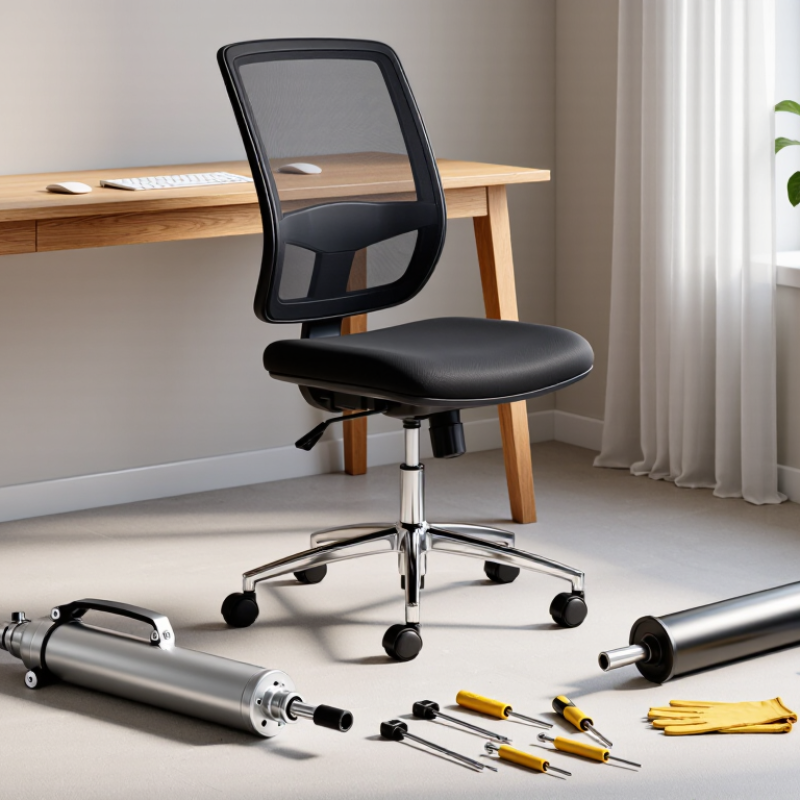
Why Does My Office Chair Sink and How to Fix It in 2026?

Why an Office Chair Sinks: Common Causes

An office chair usually sinks because its gas-lift cylinder can no longer hold pressure. A worn internal seal may let gas escape slowly, so the seat drops while you sit. Often, the change is gradual: you adjust the height in the morning, then find your knees higher than the desk by lunchtime. The cylinder’s internal valve can also fail. It is difficult to confirm the exact fault without inspecting the chair, so a sinking seat is a clue, not a complete diagnosis.

The height lever may be another cause. If it is bent, stuck, or pressed by a loose cover, it can keep the cylinder valve open. Check whether the lever returns freely after you release it. Also look underneath for a loose seat mechanism or damaged parts; these may make the chair feel unstable, though they do not always explain a steady drop. Small distinction. A chair that sinks only under heavier loads may have a weakened cylinder or may be carrying more than its rated capacity.

Repeated hard sitting and years of daily adjustments can wear moving parts. Dust and grime around the lever may interfere with its movement, but cleaning will not restore a failed cylinder seal. Avoid opening the gas lift; it is a sealed, pressurized component. If the chair keeps lowering after the lever moves freely, the cylinder is the likeliest cause, though not every chair tells the story so neatly.

How an Office Chair’s Gas Lift Works

An office chair’s gas lift is the metal cylinder beneath the seat. Inside, compressed gas moves a piston up or down. Press the height lever, and a small valve opens, allowing the piston to move. Release the lever, and the valve closes to hold the seat at that height. Simple, but precise.

When a chair slowly sinks, the internal seal or valve may no longer hold pressure. The lever can also press against the valve continuously if it is bent or misaligned. Notice when the problem happens: does the seat drop only while you are sitting, or even when the chair is empty? That clue can help distinguish a failing lift from a lever issue. It is not a perfect test, though.

Check that the lever moves freely and nothing is caught beneath it. If the seat still sinks, replacing the gas lift is usually the practical repair; tightening screws will not restore a worn internal seal. Follow the chair maker’s service guidance, or ask a repair technician if the cylinder is difficult to remove. Never drill, cut, or heat it. The cylinder is pressurized. I once blamed the lever too quickly; watching the seat drop under load would have been a better first check.

Why Does My Office Chair Sink and How to Fix It in 2026? — How an Office Chair’s Gas Lift Works

Part or symptom What happens Likely explanation What to check or do
Gas lift cylinder A sealed cylinder contains compressed gas and a moving piston that supports and adjusts the seat. The cylinder provides the chair’s height-adjustment force; it is not meant to be opened or refilled by the user. If the chair repeatedly drops under normal use, inspect the cylinder and its connections. Replace a faulty cylinder with a compatible part.
Height-adjustment lever Operating the lever moves a control mechanism that presses the valve at the top of the gas lift. If the valve is held open or the mechanism is misaligned, the cylinder may not hold its position. With the chair unoccupied, check that the lever moves freely and returns to its resting position. Look for a loose or bent linkage.
Chair sinks while occupied The seat lowers even though the adjustment lever is not being used. A worn internal valve or seal in the gas lift is a common cause. A loose mechanism can also keep pressure on the valve. Check that the lever is not touching the valve continuously. If the chair still sinks, replacing the gas lift is usually the practical repair.
Chair will not rise The seat stays low after the height lever is operated. The cylinder may have lost its ability to extend, or the lever may not be reaching the valve. Try raising the seat while operating the lever without sitting on it. If the linkage is working but the seat will not rise, inspect or replace the cylinder.
Seat moves unevenly or feels loose The chair wobbles, tilts, or shifts around the center post. A loose base, worn fitting, damaged seat mechanism, or poorly seated cylinder may be responsible. Check the base, fasteners, and visible connections. Stop using the chair if any structural part is cracked or badly worn.
Cylinder replacement A replacement gas lift restores height adjustment when the original cylinder can no longer hold the seat. Replacement cylinders vary in dimensions and fit; a part that is not compatible may not install or function correctly. Confirm the chair’s required cylinder dimensions and fitting type before purchasing. Follow the chair or replacement-part instructions.
Safety during repair The gas lift is a pressurized component. Cutting, drilling, heating, or dismantling it can release stored pressure and cause injury. Never puncture or disassemble the cylinder. Keep hands clear of pinch points, support the chair securely, and replace rather than open a faulty lift.

How to Diagnose a Sinking Office Chair

A sinking office chair usually points to a worn gas lift, but check the controls before blaming the cylinder. Sit down and note whether the seat drops immediately or slowly over several minutes. A gradual drop under steady weight often suggests the cylinder can no longer hold pressure. That matters.

Raise the chair, then test the height lever while standing beside it. The seat should move only when you operate the lever; a loose lever or bent contact tab may keep the release engaged. Look closely. Check that the lever returns freely and does not rub against the mechanism. Also inspect the underside for a cable or handle that appears stuck. Keep fingers clear of moving parts.

Repeat the test with the chair unoccupied. If it stays up empty but sinks when you sit, the cylinder is a likely cause, though this check is not foolproof. Make a note of the seat height and how quickly it drops; those details help a repair professional assess the fault. Do not open or puncture the gas cylinder. If the chair is unstable, stop using it until the cylinder or control mechanism can be safely repaired.

Step-by-Step Ways to Fix a Sinking Chair

A sinking office chair usually points to a worn gas lift, but check the controls before replacing parts. Remove your weight, raise the chair fully, and move the height lever. Turn the chair over only when it is unoccupied. Check whether the lever or its linkage is stuck against the small valve pin. This detail is easy to miss.

If the linkage is loose, reconnect it only as the chair’s instructions allow. If the pin moves but the seat still drops, the gas lift may have failed. Replace the complete cylinder with a compatible part, following the chair maker’s instructions or using a repair professional. Never drill, heat, or dismantle a gas cylinder; it is pressurized. The U.S. Bureau of Labor Statistics recorded 269,530 musculoskeletal-disorder cases involving days away from work in 2023. That figure is not caused by sinking chairs, but it underlines why stable seating matters during long shifts.

Tips: Keep fingers clear of the lever mechanism. Test the repair at the lowest height first, then raise the seat gradually. If the base is cracked or the chair wobbles, stop using it.

Why an Office Chair Sinks: DIY Fix Time Estimates

A sinking chair often has a worn gas lift. These approximate DIY time ranges cover common fixes; actual time depends on the chair and how easily its parts come apart.

How to use this: First check and tighten the seat mechanism. A hose clamp can limit how far the chair sinks, while replacing the gas lift is the more direct repair for a worn cylinder. Choose a compatible replacement and never drill into or open a gas lift.

When to Replace the Gas Lift or Chair

A chair that slowly drops while you sit usually has a worn gas lift, but check the height lever first. Turn the chair upside down and inspect whether the lever moves freely and actually touches the lift valve. If the chair stays low after you release the lever, or sinks again under normal weight, the cylinder is likely failing. A temporary clamp may stop the drop, but it does not restore reliable height adjustment.

Replace the gas lift when the chair’s frame, base, and casters remain sound. Choose a compatible replacement and follow its instructions; do not drill, heat, or open the pressurized cylinder. If the base wobbles, the seat plate is cracked, or several parts are loose, replacing the whole chair is usually the more sensible choice. A new cylinder cannot fix a damaged frame. Annoying, but true.

The ANSI/BIFMA X5.1-2017 office-chair durability standard includes repeated-cycle tests, with some components tested for up to 120,000 cycles. That is a laboratory benchmark, not a guarantee that every chair or gas lift will last that long. Check the chair’s age, repair cost, and condition together. If it still sinks after a correctly fitted lift is installed, stop using it and inspect the seat mechanism or frame before anyone sits down.

FAQS

Why does my office chair sink while I sit?

A worn seal inside the gas-lift cylinder may let pressure escape. The seat may slowly drop below desk height. Annoying, but common.

Could the height lever cause the chair to sink?

Yes. A bent, stuck, or obstructed lever may keep the cylinder valve open. Check that it returns freely when released.

How can I check whether the cylinder is failing?

Raise the chair and test it while empty, then sit and observe the seat. If it stays up empty but sinks under your weight, the cylinder may be worn. This test is not foolproof.

Why does my chair sink only when I sit on it?

The cylinder may be weakened, or the chair may be carrying more than its rated capacity. Check its condition and weight limit.

Can cleaning the lever fix a sinking chair?

Cleaning dust or grime may help the lever move freely. It will not repair a failed cylinder seal. Small fix, maybe.

Is it safe to open the gas-lift cylinder?

No. It is sealed and pressurized. Do not open, drill, heat, or puncture it.

Should I replace the gas lift or the whole chair?

Replace the gas lift if the base, frame, and casters remain sound. A cracked seat plate or wobbling base may make replacing the whole chair more sensible.

What details should I note before seeking a repair?

Record the seat height and how quickly it drops. Also mention whether it sinks when empty or only when occupied. That helps, though it may not reveal the exact fault.

Can a temporary clamp solve the problem?

A clamp may stop the seat from dropping, but it does not restore dependable height adjustment. If the chair feels unstable, stop using it until it is safely repaired.

Conclusion

If you’re wondering, “why does my office chair sink and how to fix it,” the problem usually comes from a worn or damaged gas lift, a loose adjustment lever, or a mechanism that no longer holds pressure. An office chair’s gas lift uses a sealed cylinder to raise and lower the seat and support your chosen height. Checking whether the chair sinks only when occupied, whether the lever moves freely, and whether the cylinder or surrounding parts appear damaged can help identify the cause.

Start by checking the height-adjustment mechanism and tightening any accessible loose fittings. If the gas lift is worn, a temporary pipe clamp can sometimes keep the seat at a fixed height, while replacing the cylinder is a more lasting repair. Follow the chair’s instructions and avoid opening or puncturing the sealed cylinder. If the base, seat, or other structural parts are damaged, or the chair remains unstable after repair, replacing the chair may be the safer and more practical choice.

Sienna

Sienna

Sienna is a skilled marketing professional with a deep expertise in our company’s core products and services. With a passion for innovation and detail, she plays a pivotal role in crafting insightful blog posts that not only highlight the unique features of our offerings but also provide valuable......