An Industry-Leading Manufacturer of High-End Custom Residential and Contract Hospitality Furniture Solutions
In the contemporary B2B furniture sourcing landscape, selecting a manufacturer for European Conformity (CE) certified coffee tables and specialized contract furniture involves looking beyond aesthetic considerations. Commercial project specifiers, procurement managers, and hotel chains require compliance, material traceability, high-throughput manufacturing stability, and verified design engineering. Guangzhou Mingkei Furniture Co., Ltd., based in Guangzhou, Guangdong Province, China, is an established industry player situated within the Pearl River Delta furniture manufacturing cluster.
We supply residential and commercial projects globally, helping wholesalers, contract distributors, interior design firms, and large-scale retailers establish optimized, direct-factory procurement lines. The demand for CE certified coffee tables is driven by strict regulatory requirements in European and associated international markets. These regulations cover mechanical loading parameters, structural shear point safety, low volatile organic compound (VOC) emissions, and high-performance safety glazing. Mingkei addresses these technical requirements to support client compliance and quality control.
In B2B commercial sourcing, European Conformity (CE) marking serves as a key indicator of compliance with safety, health, and environmental protection standards. For coffee tables and general structural furniture, achieving CE certification requires meeting specific testing criteria:
Specifies requirements for the safety, strength, and durability of all types of domestic tables, ensuring structural stability under high loading tests.
Applies mechanical force vectors to evaluate deflection, shear risks, impact resistance, and durability under repeated loading sequences.
Ensures that plywood, MDF, particle boards, and adhesive layers meet EN 717-1 gas analysis standards, maintaining emissions below E1 and E0 limits.
For composite glass structures, tempered glass must conform to EN 12150-1 (thermal toughened safety glass), which regulates fragmentation patterns under load to prevent injury. Metal frames are finished with thermosetting epoxy-polyester powder coatings that comply with the RoHS Directive, verifying that heavy metals are not present. By adhering to these standards, our coffee tables are engineered to meet the structural demands of high-traffic commercial environments, including luxury hotel lobbies, corporate lounges, and student residences.
SEO Insight & Information Gain: When sourcing furniture from Chinese factories, verifying third-party laboratory test reports from accredited institutions (such as SGS, TÜV, or Intertek) is critical. Guangzhou Mingkei provides structural test documentation, material safety data sheets (MSDS), and compliance certificates for all contract-grade shipments.
Enterprise-level buyers face evolving logistics and product requirements. Current furniture sourcing trends emphasize sustainability, modularity, and risk mitigation. Procurement managers prioritize several operational criteria:
Knocked-Down (KD) structures reduce cubic volume, lowering ocean freight costs and helping to prevent damage during transit.
Flexible minimum order quantities allow project specifiers to run pilot programs and supply boutique developments without excessive inventory risk.
Commercial-grade coffee tables require surfaces that resist scratches, burns, and water stains, utilizing materials such as sintered stone, HPL, and solid wood.
Guangzhou Mingkei Furniture Co., Ltd. adapts to these market demands by providing integrated, direct-factory sourcing solutions. Our proximity to the Pearl River Delta supply chain network enables efficient sourcing of raw materials, including sustainably harvested FSC timber, structural carbon steel, premium high-resiliency foam, and technical upholstery fabrics. By controlling the production flow, we maintain consistent manufacturing quality and cost-efficiencies that are passed directly to our commercial partners.
Our manufacturing facility in Guangzhou is structured to support quality control at each stage of production. From raw material preparation to final component packaging, our processes utilize specialized machinery and assembly layouts. Below is an overview of our core production and equipment flow:
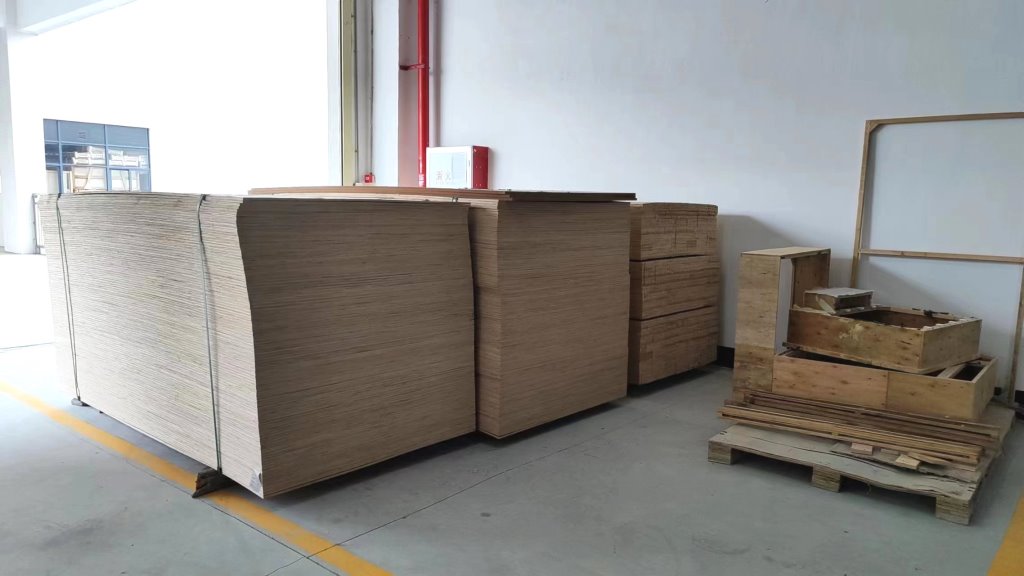
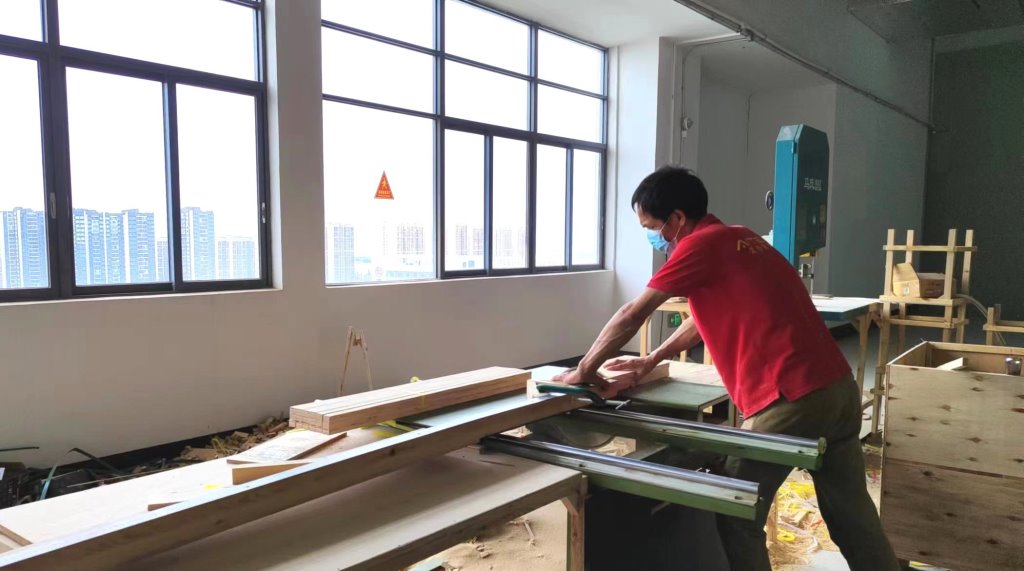
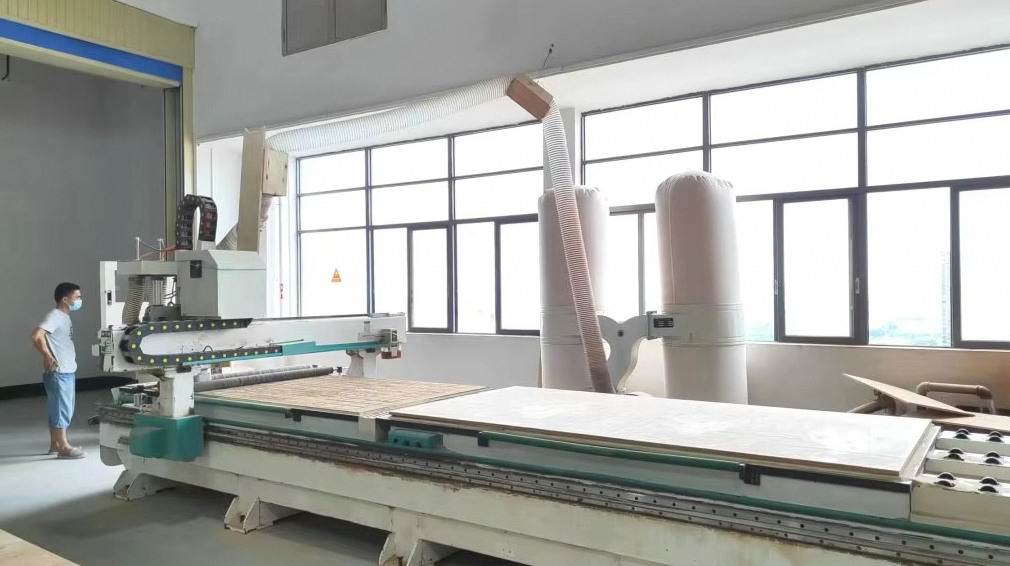
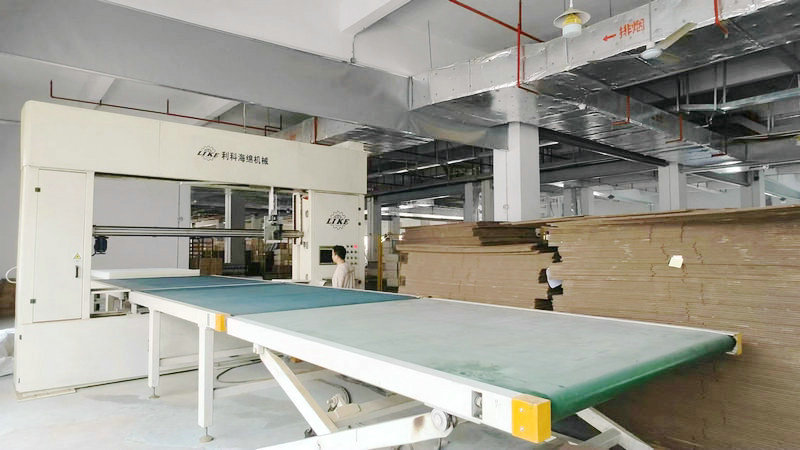
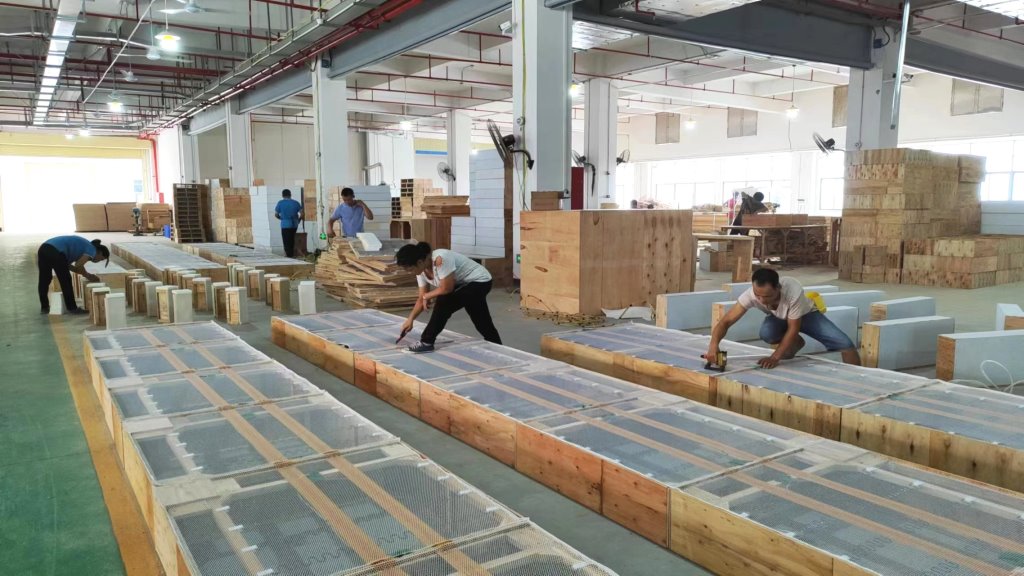
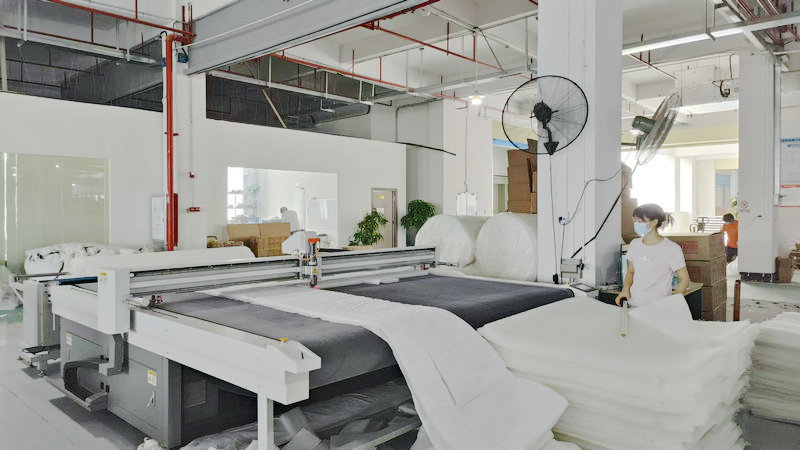
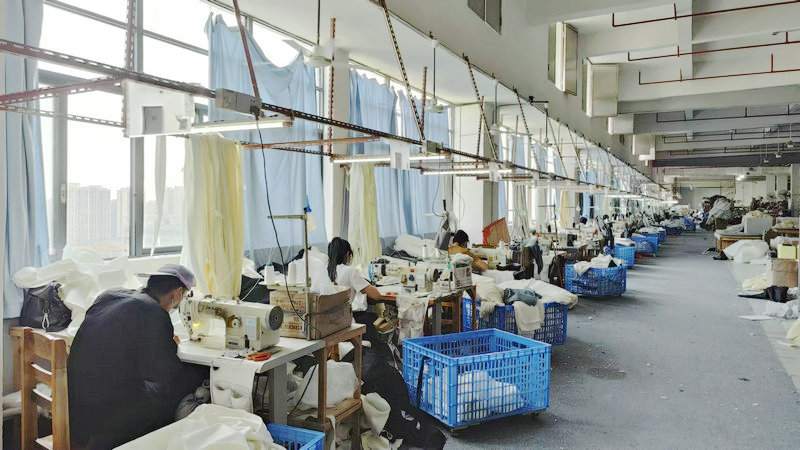
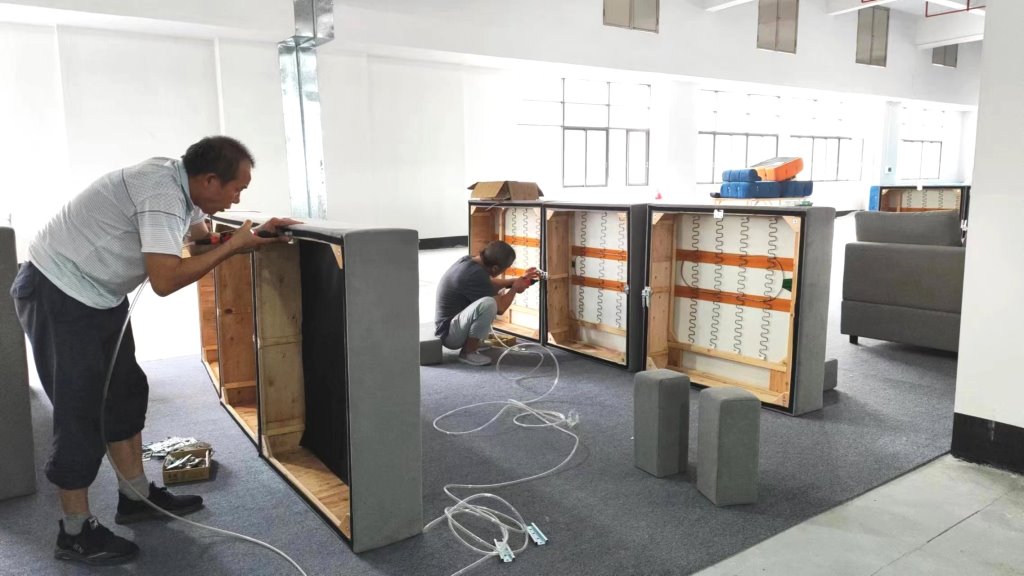
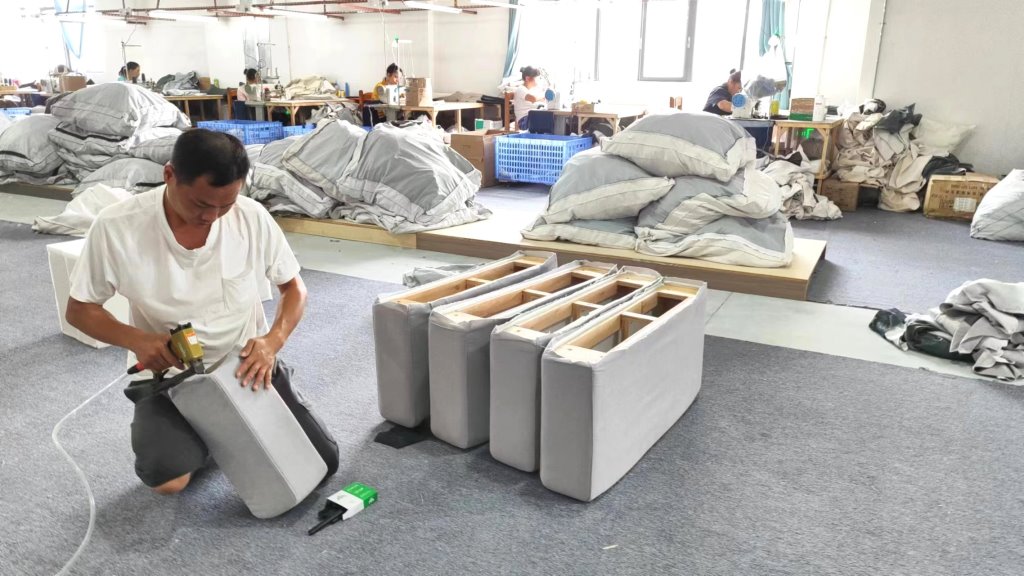
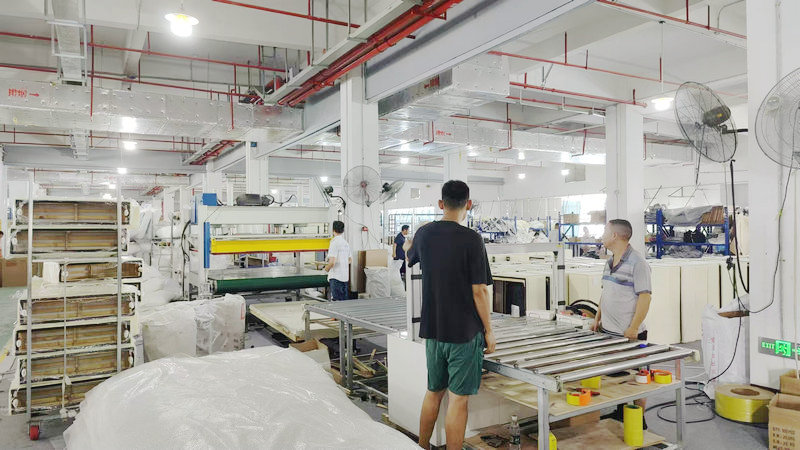
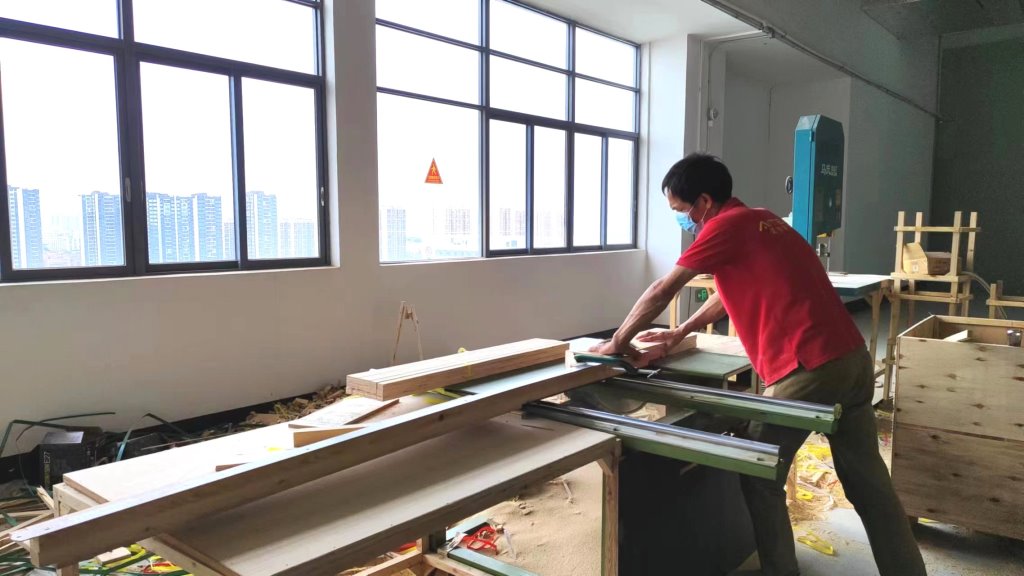
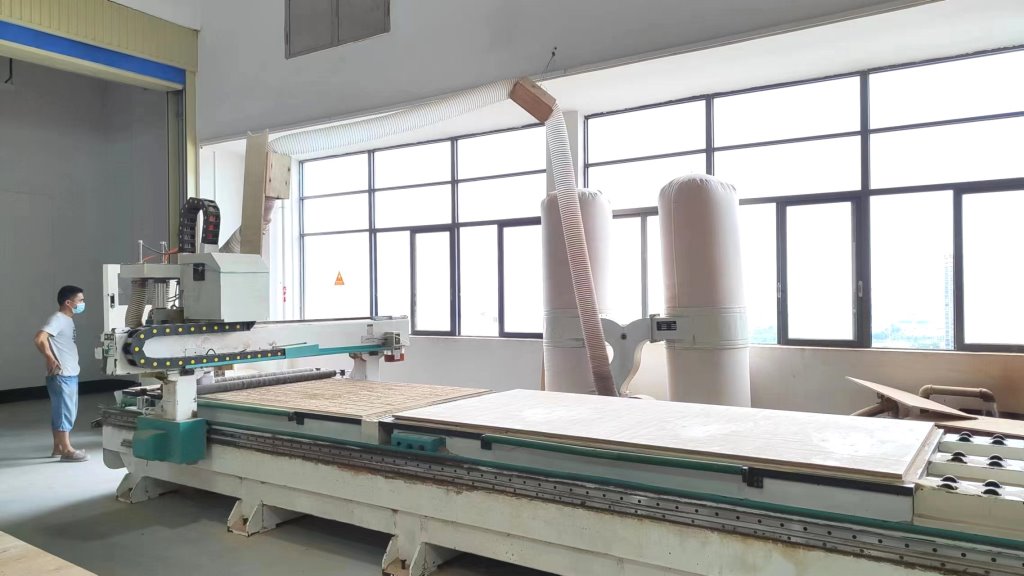
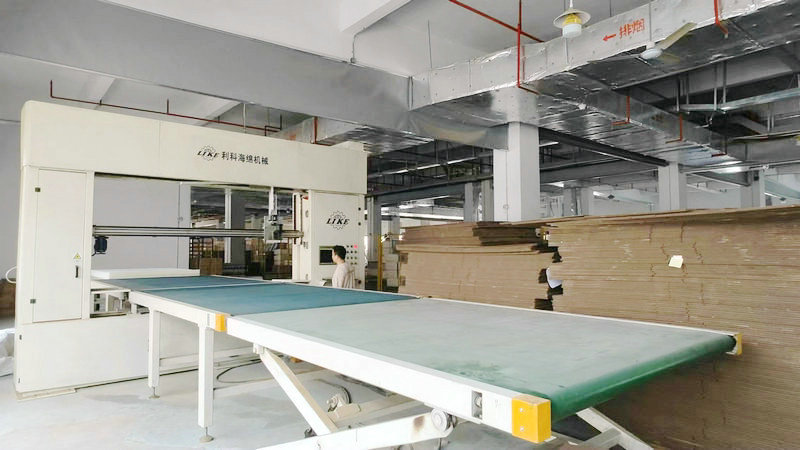
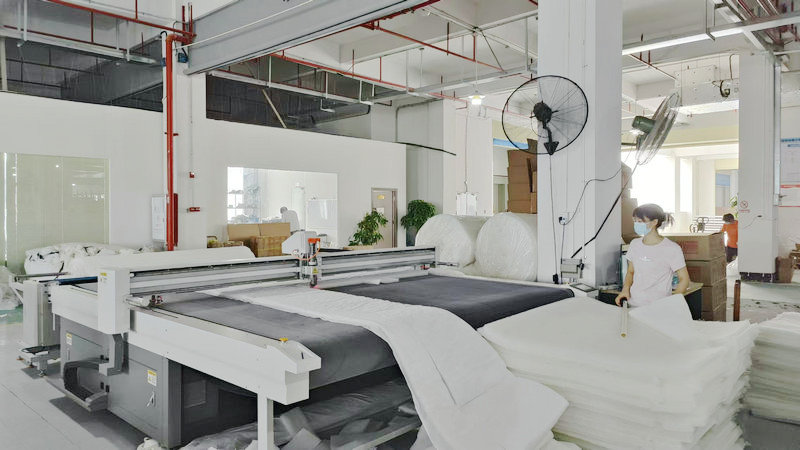
Our production workflow is structured to ensure that raw timbers are kiln-dried to moisture levels between 8% and 12%, reducing the risk of splitting or warping in different climates. CNC engraving and slide-sawing operations maintain tolerances within ±0.5mm, ensuring structural alignment. During assembly, joints are reinforced with dowels, mortise-and-tenon connections, and corner blocks to provide stability under high mechanical loads. Our packing department uses 5-ply double-corrugated cartons, corner protectors, and high-density foam wrapping, meeting the ISTA 3A transit safety standard for international logistics.
Exporting to more than 50 countries requires an understanding of different regional compliance frameworks and logistical standards. Guangzhou Mingkei Furniture Co., Ltd. adapts its material selections to meet localized regulatory standards:
Our logistical services support FOB, CIF, DDU, and DDP shipping terms, assisting B2B buyers with customs clearance and local delivery coordination.
Looking ahead, the commercial coffee table market is adapting to new developments in smart space design and environmental sustainability. Guangzhou Mingkei Furniture is updating its product development focus to incorporate these trends:
1. Smart Feature Integration: Designing coffee tables that incorporate inductive wireless charging, hidden cable management systems, and modular sensor ports for collaborative workspaces.
2. Low-Impact Materials: Increasing the use of water-based, VOC-free finishes, recycled metal alloys, and bio-resin composites to help projects meet LEED and BREEAM environmental ratings.
3. Modular Configurations: Creating nesting and height-adjustable table options to support flexible layouts in multi-use commercial spaces.
To achieve CE certification, coffee tables must pass testing under EN 12521 for strength, durability, and stability. This includes static load tests on the table surface (applying up to 100 kg of force), fatigue tests on the support frame (over 10,000 cycles of horizontal force), and edge impact tests to ensure the unit does not tip or sustain damage. Material safety checks, such as chemical emission testing under EN 717-1, are also required to verify that formaldehyde emissions remain below E1 thresholds.
We source engineered wood materials, including MDF, plywood, and particle board, from suppliers certified by EPA-approved third-party certifiers (TPC). Every material batch is accompanied by compliance certificates verifying that formaldehyde emissions do not exceed the 0.05 ppm threshold for MDF. These documents are recorded and provided to clients with shipping documentation.
We offer custom OEM and ODM services, including customized cardboard box designs with customer logos, product information labels, and transit barcodes. For retail e-commerce clients, we design packaging to meet mail-order drop-test standards (such as ISTA-3A/6-AMAZON) by incorporating high-density corner guards and molded poly-foam inserts.
For standard bulk container orders (20GP/40HQ), our production lead time is typically 30 to 45 days after deposit confirmation and technical design sign-off. Custom material procurement or complex metal-and-stone designs may require additional time, which is detailed during the initial quoting phase.
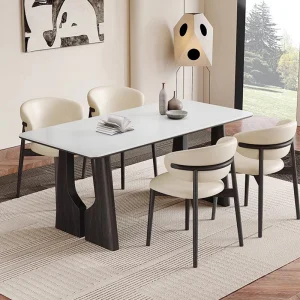
Our contract furniture utilizes wear-resistant materials, including sintered stone surfaces that resist scratching, staining, and heat, as well as solid hardwood frames for structural stability. Wood-to-metal connections use threaded inserts to allow for repeated disassembly and reassembly without compromise. Upholstery fabrics are tested for durability using the Martindale rub test method.
 Mingkei Furniture