Premium architectural collections designed for high-traffic environments, luxury hotels, and modern corporate spaces.
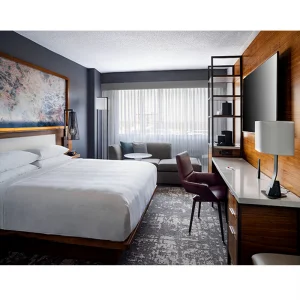
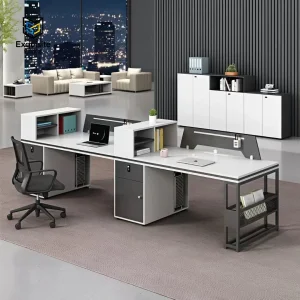
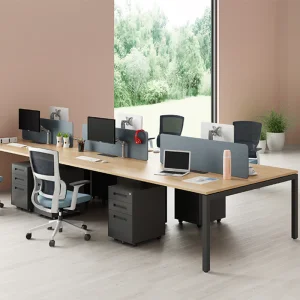
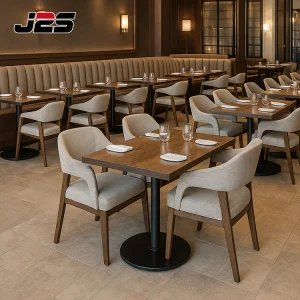
Within the realm of commercial architecture and interior design, the lobby is not merely a transient pass-through area; it is the physical manifestation of a brand's corporate identity. This is the premise of user intent mining in design: understanding how human behavior maps to spatial zoning. A visitor's impression of an enterprise is formulated within the first seven seconds of entry, and the design, placement, and quality of the lobby seating are primary drivers of this initial assessment.
As corporate real estate evolves, the lobby is increasingly expected to serve multiple purposes. Modern seating configurations must cater to varying dynamics: brief individual waiting times, collaborative check-ins, informal interviews, and casual touch-points for remote employees. Consequently, specifiers, developers, and architects seek lobby seating options that balance aesthetic ambition with heavy-duty structural integrity.
Information Gain Insight: The transition to hybrid working models has altered lobby occupancy patterns. Standard straight sofas are yielding ground to modular configurations equipped with integrated power ports, acoustic wraps, and private task lighting. Choosing the right manufacturer involves evaluating how their engineering practices align with these new architectural standards.
Corporate procurement teams and project managers look for distinct technical baselines when auditing lobby furniture manufacturers. Lower quality alternatives fail to withstand the cyclic loading and environmental wear of high-traffic commercial spaces. When sourcing globally, check for these five critical technical areas:
High-traffic areas require high-density, cold-cured polyurethane foams (minimum 45kg/m³ density) that retain their shape over a decade of continuous service. Frame structures must be crafted from kiln-dried hardwoods or powder-coated structural steel with reinforced structural gussets to prevent joint separation.
Commercial furniture must carry relevant regulatory structural ratings. BIFMA (Business and Institutional Furniture Manufacturers Association) and EN testing standards certify structural stability, load-bearing capacities, and cycle tests of arms, backrests, and base structures under severe conditions.
Specify commercial-grade textiles. Lobby seating should feature fabrics with a minimum rating of 100,000 double rubs on the Wyzenbeek scale (or equivalent Martindale cycles). Synthetic fibers, treated wool blends, and performance leathers with stain-repellent coatings ensure stain-resistance and simple maintenance schedules.
Navigating cross-border procurement requires strict compliance with localized fire-safety and ecological directives. Manufacturers who cannot supply certified lab reports present high liability risks for commercial developments.
| Region | Key Standard | Focus Area | Compliance Details |
|---|---|---|---|
| United States | CAL 133 / BIFMA X5.4 | Flammability & Structure | Full-scale open flame test for public spaces; structural safety protocols. |
| United Kingdom | BS 5852 (Crib 5) | Fire Safety / Flammability | Smouldering cigarette and match tests on upholstery composites. |
| European Union | EN 16139 (Level 2) | Strength & Safety | Determines structural strength for heavy contract use in airports, stations. |
| Global | REACH & RoHS | Hazardous Substances | Eliminates heavy metals, toxic flame retardants, and VOC emissions. |
For example, projects in California, Illinois, and Boston require strict adherence to TB 133 flammability regulations. In the United Kingdom, compliance with the Furniture and Furnishings (Fire Safety) Regulations 1988 (BS 5852) is legally required. Working with a manufacturer equipped with a dedicated test laboratory prevents customs holds and project installation delays.
The Pearl River Delta (PRD) region in Guangdong Province, China, remains the world's largest furniture manufacturing ecosystem. This dense cluster of raw material suppliers, component specialists, and logistic networks gives local manufacturers a competitive edge over regional alternatives. At the center of this cluster is Guangzhou Mingkei Furniture Co., Ltd.
Guangzhou Mingkei Furniture Co., Ltd. is an export-oriented commercial furniture manufacturer that supplies residential and contract projects globally. Drawing on the PRD industrial base, Mingkei offers end-to-end design, rapid prototyping, and volume production. This integrated model helps buyers optimize their procurement costs while maintaining high quality control standards.
Whether handling custom commissions or bulk orders, the integration of local hardware suppliers, CNC machining, and specialized foam producers helps minimize lead times. While independent factories elsewhere face weeks of component delays, Mingkei can source custom materials and build dynamic prototypes in a fraction of the time.
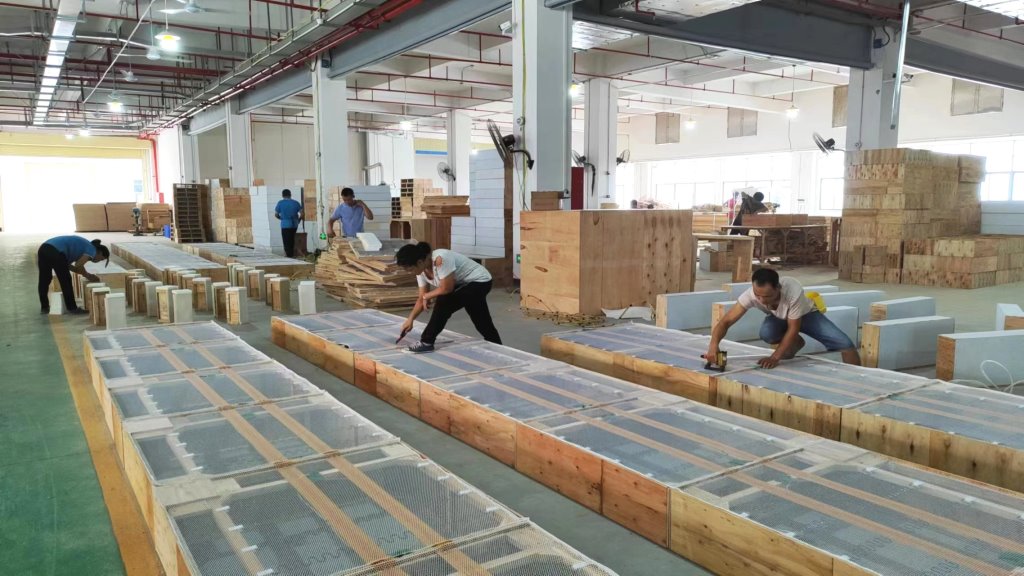
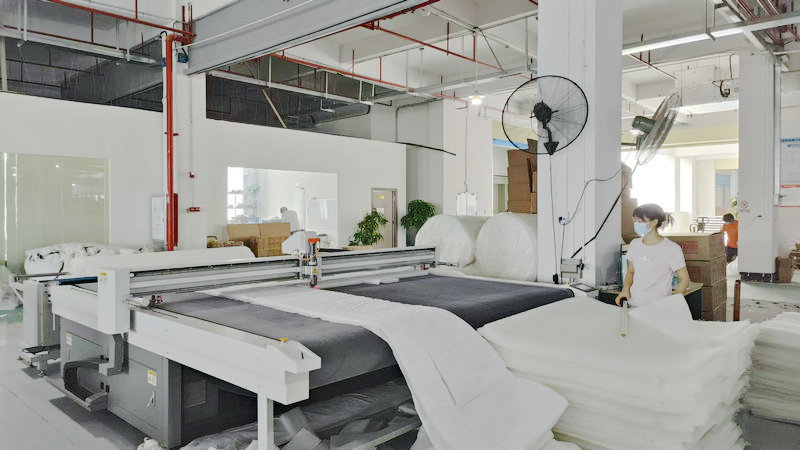
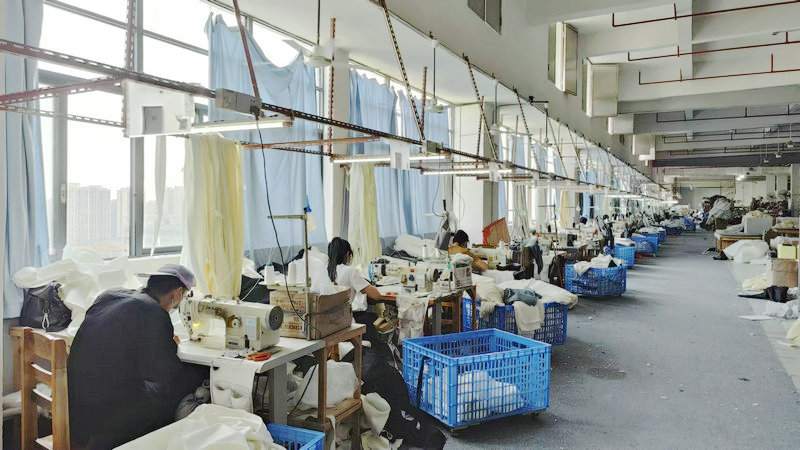
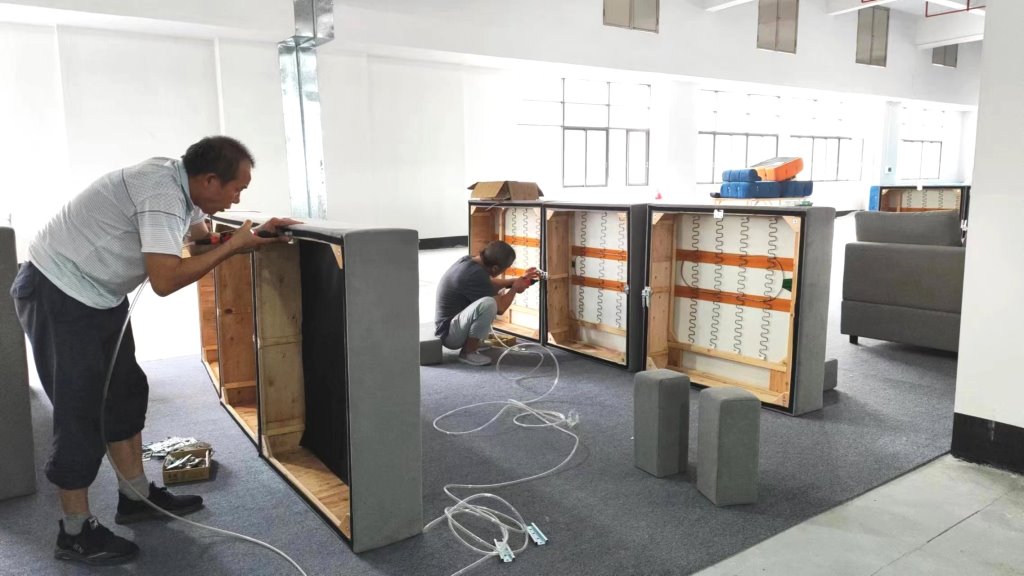
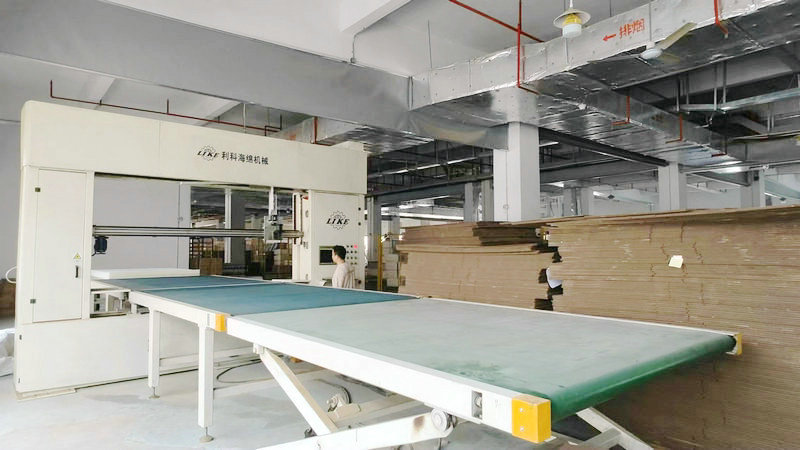
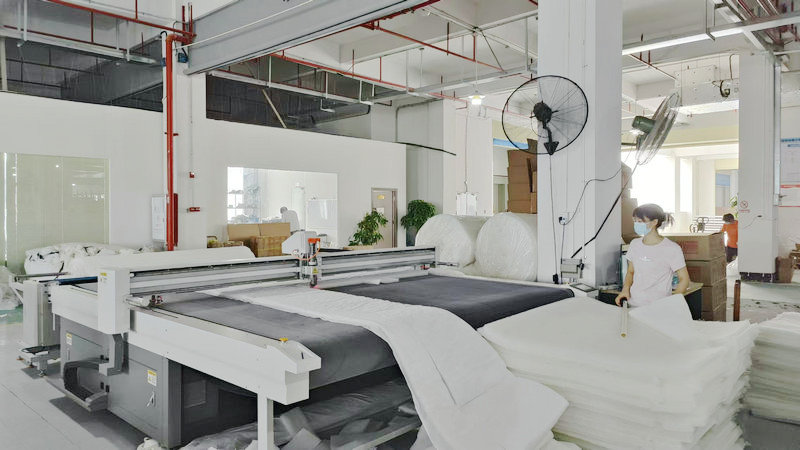
Take a look inside the Guangzhou Mingkei manufacturing facility, where custom raw materials are shaped into premium contract furniture using modern machinery and artisan techniques.
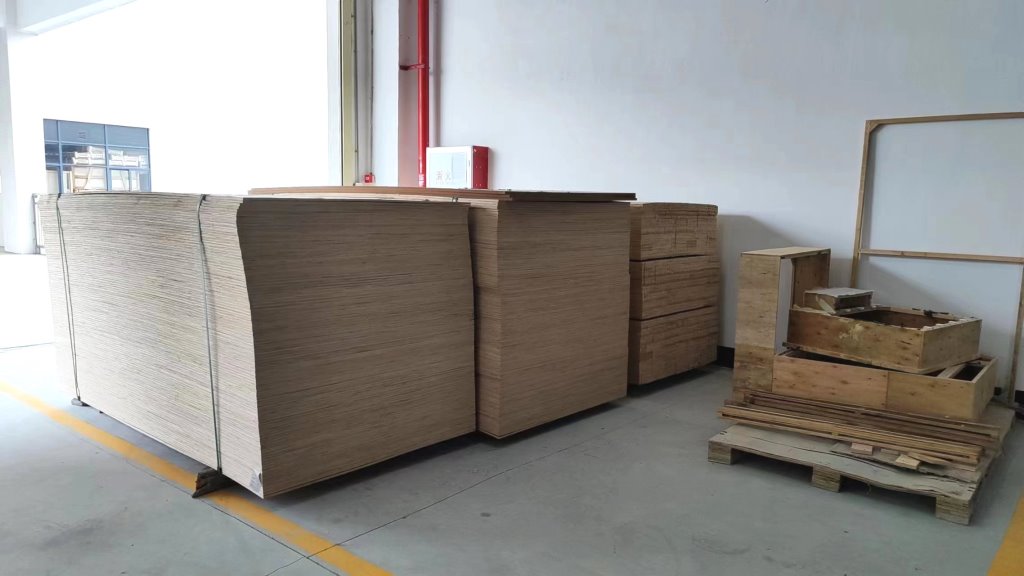
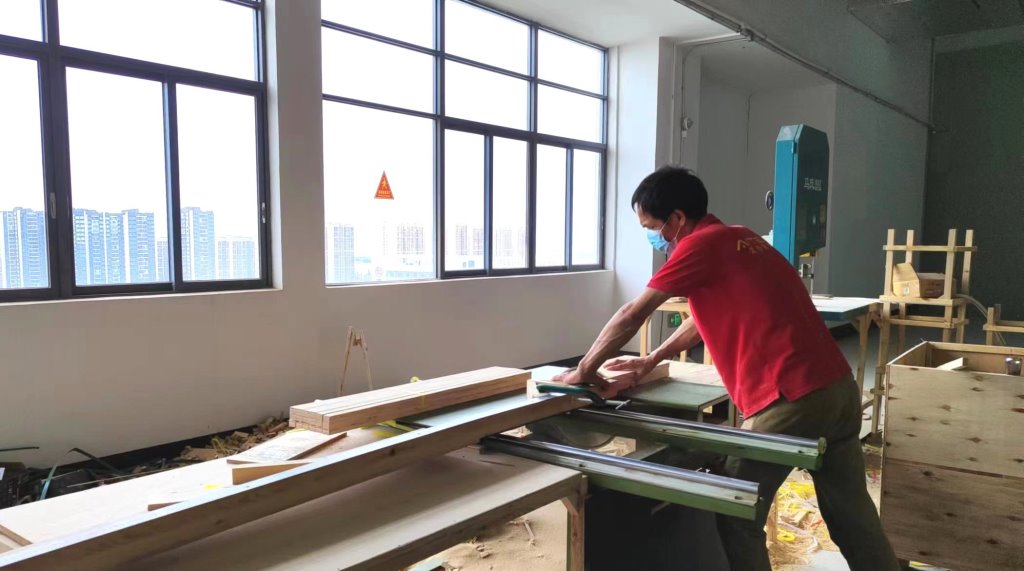
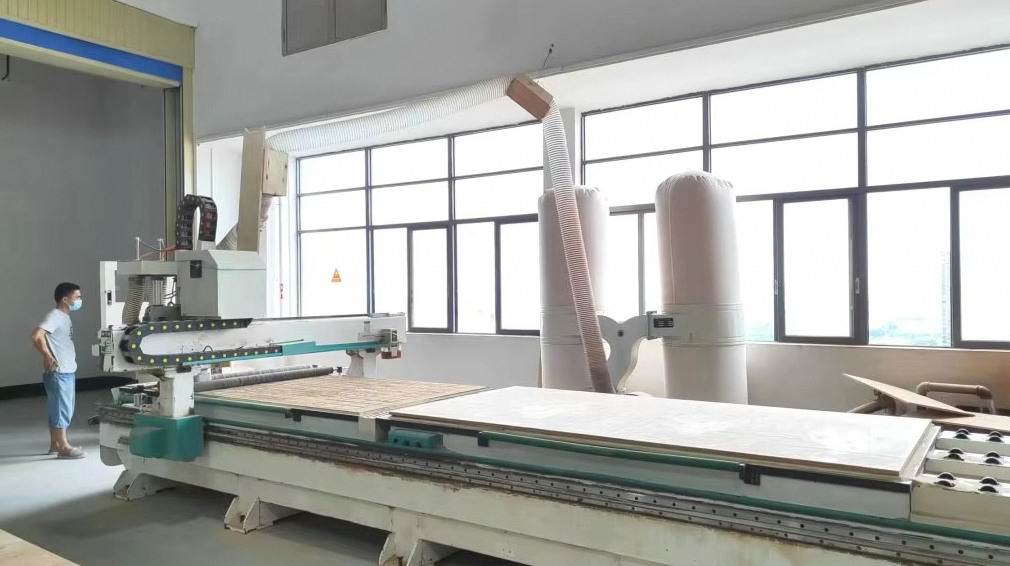
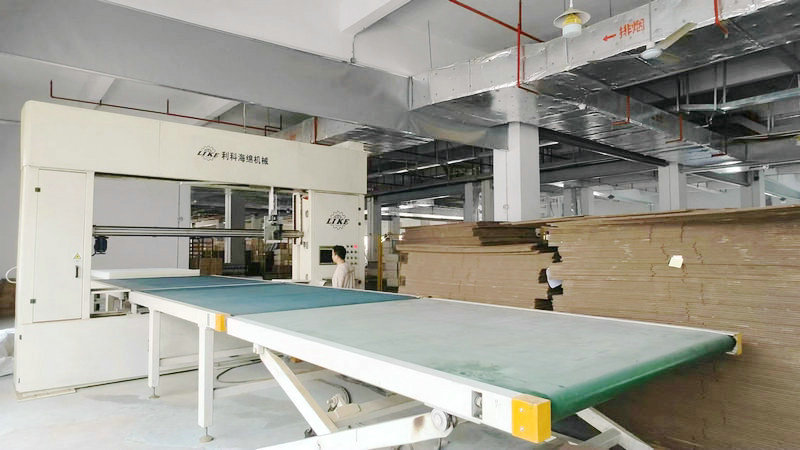
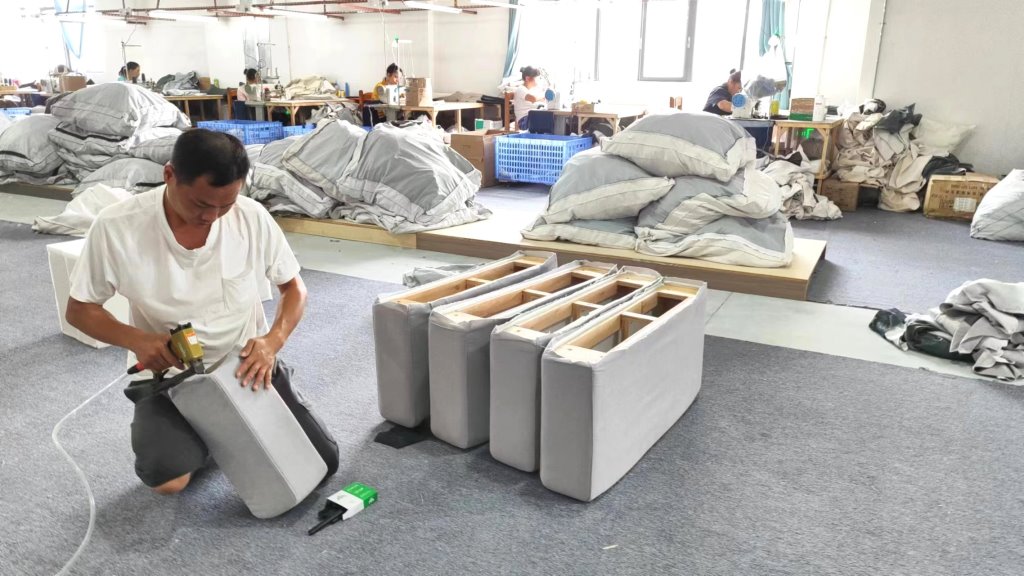
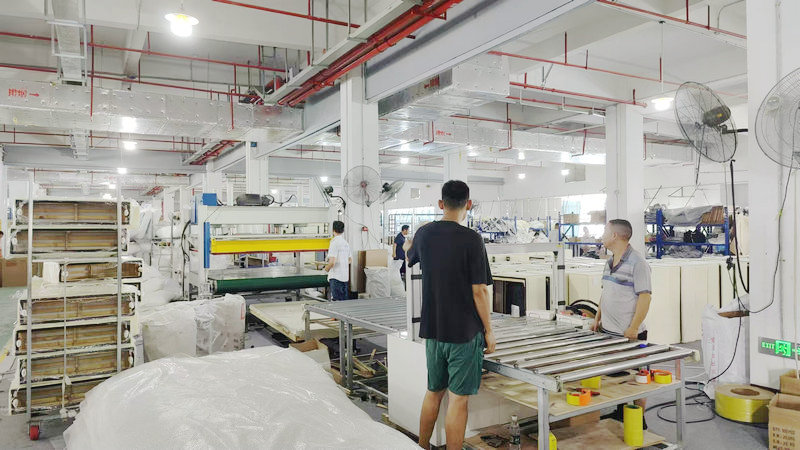
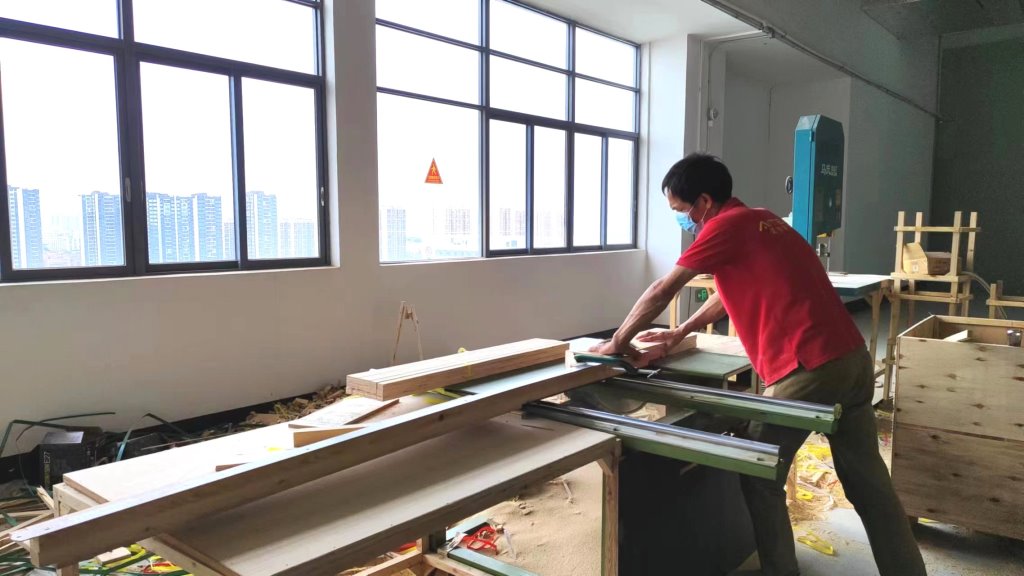
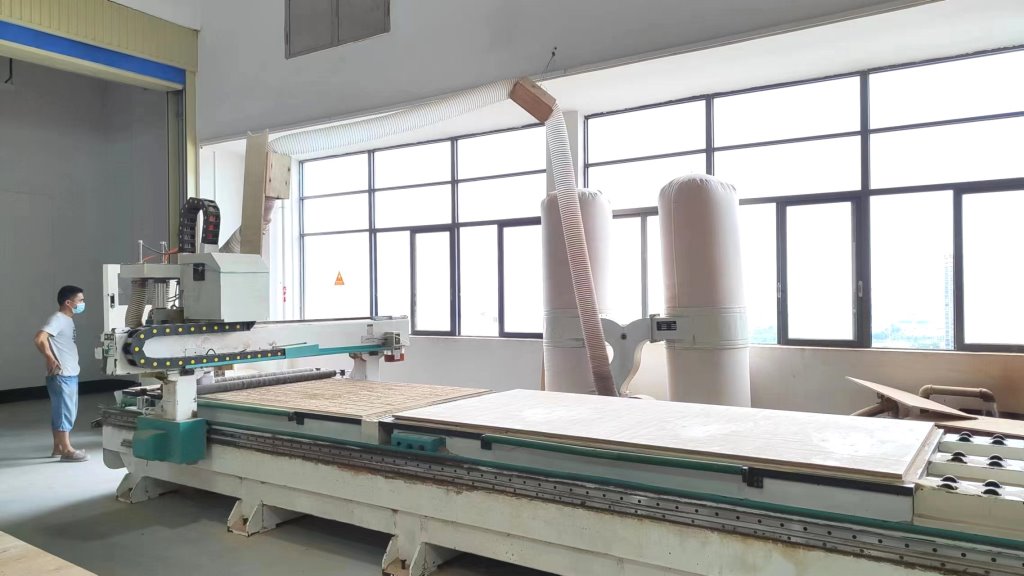
Sourcing lobby furniture internationally requires balancing manufacturing and transit times. While domestic sourcing offers shorter lead times, manufacturing in China provides cost efficiencies and scaling potential, even when factoring in ocean freight schedules. Mingkei manages this transition through structured logistics support.
The company exports to over 50 countries and regions worldwide, including:
By offering consolidated container packing, export documentation, and cargo insurance assistance, the company helps minimize typical supply chain friction. The production workflow is supported by dedicated ERP software that tracks stages from raw material cut to final packaging. This visibility allows project managers to align delivery dates with on-site installation schedules.
Different commercial spaces present unique design and spatial challenges. Designing for user intent involves tailoring the seating layout to fit the specific needs of each sector:
Corporate lobbies serve both as welcoming areas and casual work zones. Modular sectional systems equipped with acoustic high-backs and integrated power outlets allow visitors and employees to work productively while waiting. Laying out furniture in clusters helps maintain open walk paths while creating distinct zones for small meetings.
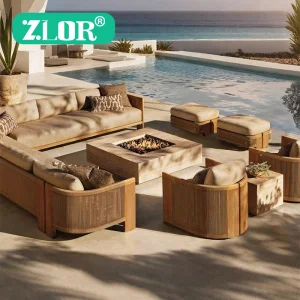
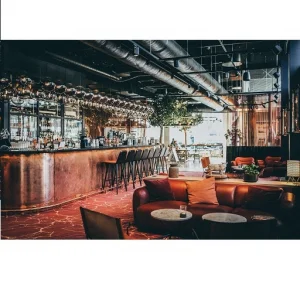
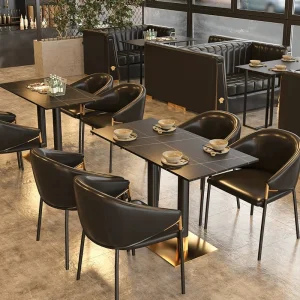
Hotel seating should emphasize tactile comfort and design details. This calls for organic curved configurations, rich velvet or top-grain leather finishes, and sculptural accent tables. These pieces should feature structural internal frames to withstand 24/7 guest traffic without sagging.
Healthcare lobbies require strict cleanability protocols. Modular, non-porous vinyl seating, elevated metal legs that allow easy cleaning access, and open-underframe designs are standard. Seating arrangements should prioritize privacy, utilizing spaced modular armchairs rather than closely packed benches to reduce patient contact.
Co-working common areas need highly adaptable furniture. Lightweight modular blocks, swivel-based lounge chairs, and media-ready pods allow users to quickly reconfigure the space. Upholstery should focus on high-durability fabrics with stain-resistant coatings.
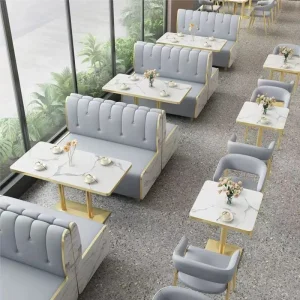
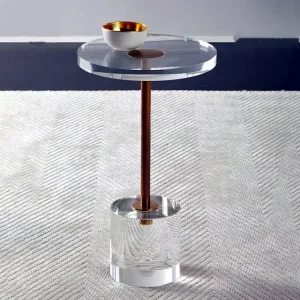
Explore our full range of commercial-grade tables, seating systems, and custom interior furniture designed to match demanding project specs.
 Mingkei Furniture